01
An engineer’s training
At the École polytechnique d’ingénierie de Montpellier, I trained as an engineer. In Paris, I helped write a self-monitoring manual, the document that governs how discharged water is checked, at SIAAP, the public sanitation authority for the Paris metropolitan area and one of Europe’s leading sanitation operators.
In 2017 I was a Mandela Washington Fellow, on the US State Department programme for young African leaders.
02
Waterleaf, from design to maintenance
That same year I founded Waterleaf in Dakar. The company builds drinking water and sanitation networks, pumping stations, roads and buildings for public clients and private partners alike. Waterleaf follows each project from design through construction, then maintains it and monitors its environmental performance.
For industry and construction camps, Waterleaf installs compact containerised effluent treatment units and runs their self-monitoring.
03
Classou Dibor, a classroom in fifteen days
SOKKEL, Waterleaf’s modular construction subsidiary, is developing Classou Dibor with the architecture firm Lamtoro Architecture: a prefabricated classroom designed to replace temporary school shelters. Produced and assembled in Senegal in fifteen days, the classroom pairs materials with high thermal inertia with natural light, and series production brings its cost down.
04
What I said in Kigali
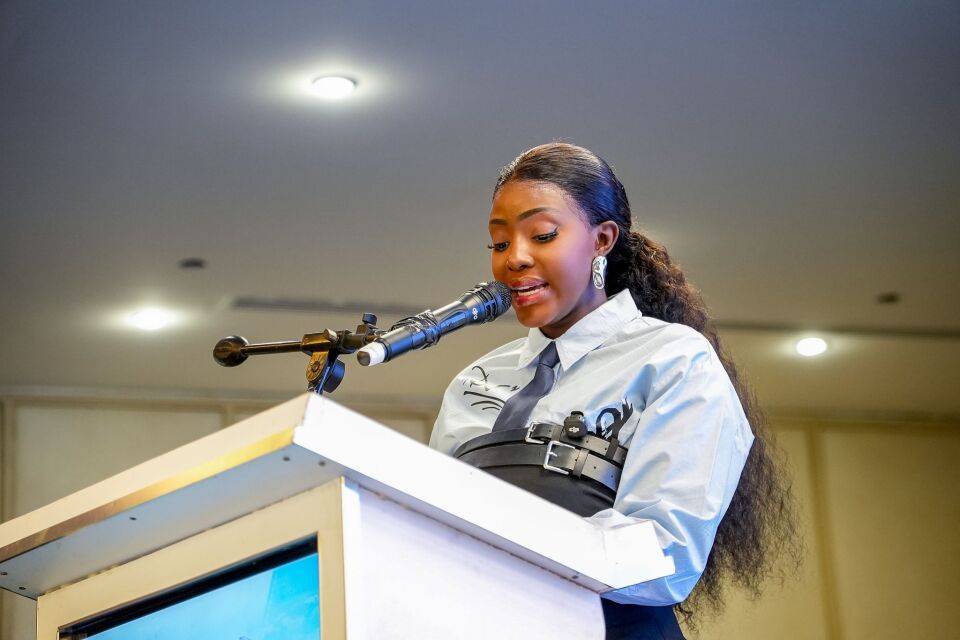
In August 2026 I took part in the Africa Water and Sanitation Systems Leadership Symposium in Kigali, which brought together the African Ministers’ Council on Water (AMCOW), the African Development Bank, AUDA-NEPAD and the World Bank, among others.
I came back with one observation. Despite the scale of the funding raised for water and sanitation in Africa, African companies remain largely absent from the mechanisms that set priorities and decide access to contracts.
The continent does not give the African private sector the means to carry weight. We are present in delivery, but absent from the forums that decide.
One of the main obstacles lies in how international tenders are designed. Their requirements on references, financial capacity and company size often match the means of large international groups. African companies end up as subcontractors: they deliver a large share of projects without holding the contracts. As a result they build up few references of their own, and part of the value created leaves the continent.
In the end, it is African companies that carry out the works. The question is why they are not allowed to win them.
05
Local content, applied to water
Several African countries have introduced local content rules so that national companies take part in the exploitation of natural resources. I propose applying the same principle to water and sanitation: reserving contracts for African companies, and helping them build skills, raise finance, professionalise and grow across the region.
What the mining code has been doing for years in several African countries, we can do for water and sanitation. Local content is not a utopia, it is a precedent.
Then there is trust between states, funders, financial institutions and companies.
When one company fails, the image of the whole African private sector is tarnished. We need a common framework to tell serious players apart.
Certification and harmonised standards can build it. I work on this within Technical Harmonisation Committee THC07 of the Economic Community of West African States (ECOWAS), which covers water and sanitation, and within the technical committee of the Senegalese Standards Association, which revises the sector’s ISO standards.
2027
As it turns ten in 2027, Waterleaf is growing in Senegal and preparing to expand across the region.
Statements translated from my interview with Les Africaines, published in French on 27 August 2026 ↗